
Course

The 2025 Franz Rosenzweig Summer Academy – “From Rabbi and Academic Scholar to Jewish Educator in the Critical Jewish Studies Tradition”

Registration Open
Schedule: July 19, 2026 - July 24, 2026; 9:00 am - 5:00 pm

Hermann Cohen’s Religion of Reason out of the Sources of Judaism:  A Guide for the Perplexed of our Day?

The Franz Rosenzweig Summer Academy 2026, July 19 – July 24

An initiative of THE NEW JEWISH ACADEMY ~ a center for teacher training and human sciences research ~ in cooperation with 36 LEARNING MATTERS

In pursuing our theme, we will address three discrete questions:

  • Is Hermann Cohen, the author of Religion of Reason, an atheistic theologian? Responding to a Perennial Worry about ‘the God of the Philosophers’
  • Does Cohen, in Religion of Reason, try to revive Prophecy as a genuine possibility in our time? Encountering a Source-Text for the ‘Prophetic Judaism’ of Martin Buber, Leo Baeck, Abraham Joshua Heschel, and at least two generations of ordinary Jews and Christians in Europe and the Americas.
  • Is the “Religion of Reason” tradition alive today, and if it’s on “life-support”, can it – and should it – be resuscitated? From Theory to Practice

A full itinerary for FRSA 2026 may be viewed here.

THE NEW JEWISH ACADEMY ~ a center for teacher training and human sciences research ~

The New Jewish Academy is a center for teacher training and human sciences research. Our mission is to train an exceptional corps of teacher-scholars in Critical Jewish Studies, equipping them with skills in learning design, shared inquiry, and hermeneutics for educators. This combination – the open and inquiring stance of Critical Jewish Studies of the last 200 years, and the know-how of the savvy adult Jewish educator – is a spark plug. As teachers, we’ve seen the sparks it generates, and lamented that this learning is not more widely available; our mission is to set a teaching movement in motion – every desiring person deserves an opportunity to belong to the life of Torah, and every desiring educator to participate in a profession developing as a craft.


Across the next decade The New Jewish Academy will mentor, train, and credential 100 new teacher-scholars drawing on the exceptional pool of talent we already have in the rabbinate and academia. This will inevitably change the landscape of adult Jewish learning in North America.

Staff

Avi Bernstein-Nahar is a Visiting Scholar at BRANDEIS UNIVERSITY, Department of Near Eastern and Judaic Studies, founder and principal of 36 LEARNING MATTERS, and founder and president of start-up, THE NEW JEWISH ACADEMY ~ a center for teacher training and human sciences research. Avi has spent his 30+ year career teaching and “teaching teachers” in universities and university adjacent institutions. Praised by students and colleagues alike for his ability to inspire inquiry and facilitate exploration in the classroom, he is the author of “In the Name of a Narrative Education: Hermann Cohen and Historicism Revisited,” among other essays.  A CV is available here.  A publications list is available here.

Daniel M. Herskowitz is Smart Family Associate Professor in Judaic Studies in the Department of Religious Studies at Duke University.  Professor Herskowitz’s full bio appears here.

Robert S. Schine is Curt & Else Silberman Professor of Jewish Studies Emeritus at Middlebury College. Professor Schine’s full bio appears here.


.

Advisory Board

The Franz Rosenzweig Academy, Summer 2026, is a program of 36 LEARNING MATTERS and THE NEW JEWISH ACADEMY

ACADEMIC ADVISORY BOARD (partial list)

Scott Edgar, Associate Professor, Department of Philosophy, Saint Mary’s University. His full bio is here.

Michah Gottlieb, Associate Professor of Hebrew and Judaic Studies, Skirball Department of Hebrew and Judaic
Studies, New York University. His full bio is here.

David Myers, Sady and Ludwig Kahn Chair in Jewish History, University of California, Los Angeles.  His full bio is here.

Julia Ng, Reader in Critical Theory and founding Director of the Centre for Philosophy and Critical Thought, Goldsmiths, University of London. Her full bio is here.


Gavriel Rosenfeld, President, Center for Jewish History, New York. His full bio is here.

Ora Wiskind-Elper, Associate Professor in the Graduate Program in Jewish Thought at Michlalah Jerusalem College and at Ono Academic College, Israel. Her full bio is here.

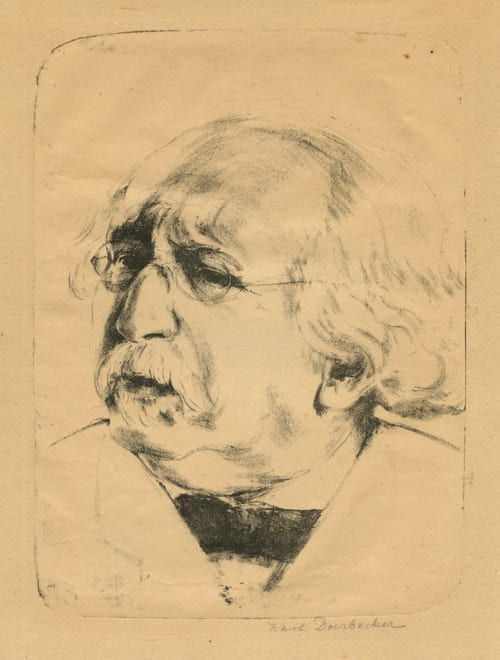
Image: Franz Rosenzweig via Wiki Commons

Frequently Asked Questions

What is the topic for Summer 2026 and what do you mean by "a guide for the perplexed?"

We are asking whether a penetrating understanding of Hermann Cohen's Religion of Reason could help address the perplexities Jews wrestle with today, including

  • what does it mean to be "religious" ?
  • where, in particular, does "reason" figure into religion in general, and Jewish tradition in particular?
  • what is the relationship between Judaism and monotheism-in-general?
  • does Jewish tradition acknowledge human-virtues-in-general, and are there distinctively Jewish virtues?
  • why do Jews need their own covenant?

What will be the structure each day?

Each day will be structured around a different question:

  • Is Hermann Cohen, the author of Religion of Reason, an atheistic theologian? Responding to a Perennial Worry about 'the God of the Philosophers'
  • Does Cohen, in Religion of Reason, try to revive Prophecy as a genuine possibility in our time? Encountering a Source-Text for the 'Prophetic Judaism' of Martin Buber, Leo Baeck, Abraham Joshua Heschel, and at least two generations of ordinary Jews and Christians in Europe and the Americas.
  • Is the "Religion of Reason" tradition alive today, and if it's on "life-support", can it – and should it – be resuscitated? From Theory to Practice

By the end of the Academy, participants will have developed a considered view regarding each question, and have the option of presenting on the question most salient to them to the larger group.

What texts will we use?

All texts that appear on the Academy itinerary will be provided in pdf form and ready for your use by May 1.

What will the experience be like, and how will it manage to produce different results from what is typical in academic gatherings?

The Rosenzweig Academy will follow backwards design principles. We will do so as follows:

1. Identify a problem that is experienced broadly and worthy of investigation: in our case, we have a Jewish social world with surging interest in a better understanding of Judaism, and a desire to belong, but also real challenging questions about the nature of Jewish affiliation.  Many are 'perplexed.'

2. Study a classic text that purports to address our problem, and structure sessions – formal and informal – so that individuals, each with differing strengths and experiences, can collaborate in answering the focal questions. In the course of the week, participants will have the chance to try their ideas out on the general public as well.

3. in a final meeting, a persuasive speaking contest will give participants a chance to confront the week's questions one final time and in pointed fashion.  The week's chronology of sessions, including this final meeting, are all designed to give the group opportunities to take stock of what they've learned and what they still need to know to deal satisfactory with the hot issues.  Every prior session was engineered to contribute to thi success of this final day.

Finally, I note that a shared-form of inquiry -- a rarity and frankly challenging to choreograph, will characterize many of our sessions – it will be the ethos of the Academy, and brought to consciousness on a number of occasions, as will the backwards design, as exposure to the educational paradigms at work in our Academy are part of an Academy-education.

What will be the role of language study in the course of the week?

Everyone at the Academy will be stretching to improve their language skills, whether as relative beginners or more advanced learners.  Hebrew and German tracks will be offered.  For more detailed information, please see the itinerary.

What is Critical Jewish Studies and how does it address current threats to the vitality of Jewish civilization? problem?

Civilizational literacy, as an animating objective of The New Jewish Academy, begins with the capacity to engage with the Hebrew Bible, as the literary font of Jewish civilization, utilizing the interpretive methods of Critical Jewish Studies*, including an appreciation of the history of the text, its sources, its redactions, the rabbinic interest in rules of interpretation (including most famously, a four-fold taxonomy of textual meaning**), and the early modern, and more contemporary advances in understanding meaning-making with sacred texts.

*to intellectual historians, this movement is usually known as Wissenschaft des Judentums

**literal meaning, imaginative meaning-expansion often an expanded story, allegory, and theological mystery.)

What does the word “critical” signify in Critical Jewish Studies?

“Critical” does not imply any negative point of view. “Critical” alludes to the heritage of academic Jewish studies, which uses all relevant disciplines in order to relate to the biblical text as an object of care and attention. CJS aims to give the best account of Jewish tradition currently available and to take full advantage of the perspectives afforded by the human sciences.

The “academic” provenance of CJS does not mean that the material need be presented in a dry fashion or so-called “academic” style. Learning design and pedagogy are crucial to the success of NJA and are driven by the question, how do I engage these students?

The New Jewish Academy is involved in research described on its website as “translational.” What does this mean?

In playing a translational role in research and its dissemination, the New Jewish Academy takes responsibility for showing its members how to curate relevant academic scholarship for a non-matriculated audience, and to render it useful to themselves and their students in the adult learning classroom.

Why is losing “civilizational literacy” more concerning than any other cultural evolution? If Jewish civilization deteriorates or even disappears, what has been lost?

We bring the conviction that Jewish civilization is precious, but we also hold ourselves accountable to having an open stance toward it and all its worthy commentators and to seeing it whole.

The Human Sciences research section of the Academy is charged with leading the way in investigating areas of wisdom and insight and rendering its discussions and explorations accessible to our teachers-in-training.

  • TIME – phenomenology of time (higher times, holiness, kairos, clock-time)
  • HISTORY – philosophy of history (linear/purposive and cyclical)
  • ETHICS AND MORAL THEORIES – visions of the ideal community (wisdom, compassion, justice, rebuke and forgiveness, dialogue, conflict for the sake of heaven, tenacious hope, prophecy-in-our-day, human dignity)
  • LAW AND POLITICS – approaches to power and human organization  (rule of law, covenant, self-determination, individualism and community)

May I compete for awards that will reduce the cost of the Academy and provide me with housing-assistance?

Yes, generous merit-based financial awards are available.

For complete details and to find applications, consult the Academy's Financial Aid page.*

*All awards are tuition waivers and do not constitute "financial aid" as defined by state and federal laws.

What is the New Jewish Academy and why is it so named?

The New Jewish Academy is a center for teacher training and human sciences research. Our mission is to train an exceptional corps of teacher-scholars in Critical Jewish Studies, equipping them with skills in learning design, shared inquiry, and hermeneutics for educators. This combination – the open and inquiring stance of Critical Jewish Studies of the last 200 years, and the know-how of the savvy adult Jewish educator – is a spark plug. As teachers, we’ve seen the sparks it generates, and lamented that this learning is not more widely available; our mission is to set a teaching movement in motion – every desiring person deserves an opportunity to belong to the life of Torah, and every desiring educator to participate in a profession developing as a craft.

Across the next decade The New Jewish Academy will mentor, train, and credential 100 new teacher-scholars drawing on the exceptional pool of talent we already have in the rabbinate and academia. This will inevitably change the landscape of adult Jewish learning in North America.

It's name derives from Die Akademie für die Wissenschaft des Judentums, an institution called for by Franz Rosenzweig and Hermann Cohen at the close of WWI in Germany as an emergency measure to respond to the threat to Jewish civilization posed by adversaries from without and neglect from within.

Financial Aid

2026 Merit-Based Awards and Work/Study

Full tuition for the Academy is $1200.

Franz Rosenzweig Scholars are graduate students or faculty of exceptional promise as teacher-scholars of the Jewish tradition. To apply to be a Rosenzweig Scholar, click here. Rosenzweig Scholars receive a $600 credit toward the full tuition of $1200 and assistance with locating local home hospitality for the week they are in-residence at the Academy. A non-refundable first payment of $300 is due by May 1.  The remaining balance is due by June 1.

Rabbi Nehemia Nobel Scholars are rabbis or rabbinical students of exceptional promise as teacher-scholars of the Jewish tradition. To apply to be a Nobel Scholar, click here. Nobel Scholars receive a full tuition waiver minus a $180 non-refundable registration fee, and assistance with locating local home hospitality for the week they are in-residence at the Academy. A non-refundable payment in full is due at the time of the award's acceptance.

Professor Alasdair MacIntyre Scholars are individuals of exceptional promise as teacher-scholars of Christian, and/or virtue-oriented traditions, and/or post-secular/post-religious education for soulfulness. To apply to be a MacIntyre Scholar, click here. MacIntyre Scholars receive a $600 credit toward the full tuition of $1200 and assistance with locating local home hospitality for the week they are in-residence at the Academy.  A non-refundable first payment of $300 is due by May 1.  The remaining balance is due by June 1.

For additional financial assistance opportunities:

To inquire about receiving a Work/Study Award, write info@36learningmatters.com and put Work/Study in the subject line.

To make a payment plan, write info@36learningmatters.com and put Payment Plan in the subject line.

In 2025 we recognized these outstanding individuals with merit-based awards:

To apply for either award, please fill out the appropriate application below:

Summer 2026 Franz Rosenzweig Scholars Application

Summer 2026 Rabbi Nehemiah Nobel Scholars Application

Summer 2026 Alasdair MacIntyre Scholars Application

We invite readers to nominate outstanding candidates for these awards. To offer a nomination, please fill out the appropriate nomination form. The deadline for nominations is May 1. Admissions is rolling – your chances of receiving an award are higher if you apply today!

Advisory Board Members are also eligible to attend the program as the guests of the Academy and at minimal cost. For additional information please write to inquiry@36learningmatters.com

and include "Advisory Board Member Participation" in the subject line.